
Blog
How to Care for a Desert Rose (Adenium): Light, Water, Soil and Feeding

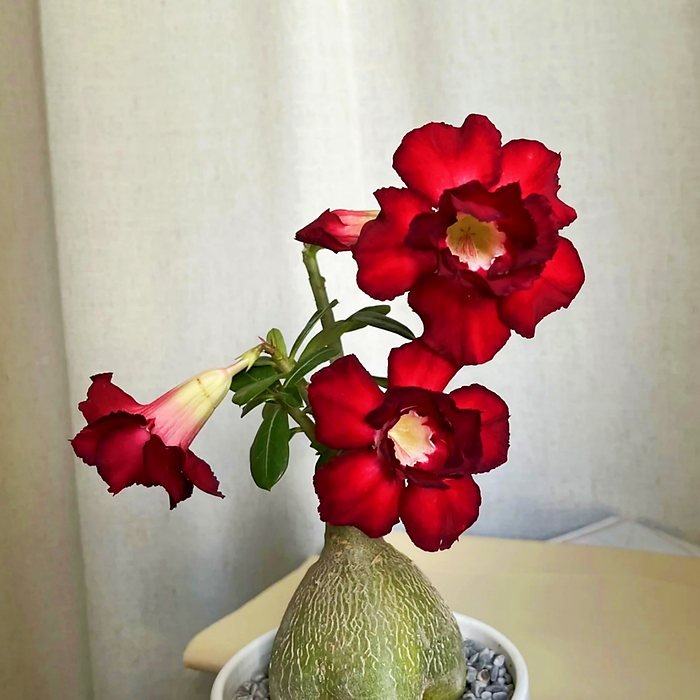
Desert rose is one of the most rewarding houseplants you can own — and one of the most commonly killed. Almost every failure comes down to the same three things: too much water, too little light, or a pot that holds water. Get those right and the same plant will flower for you every summer for decades.
What a desert rose actually is
Adenium obesum is a succulent from the Arabian Peninsula and East Africa. It stores water in a swollen, woody base called a caudex, which is why it survives long dry spells. The trade-off: it will not tolerate wet feet, ever. A bulb is not a desert rose, and a desert rose is not a bulb — you are buying a living plant with an established caudex and root system.
Light: the single biggest factor
Six hours of direct sun a day is the minimum, and more is better. Indoors, that means the sunniest window you have, and a grow light if you are in a dim apartment. A desert rose that gets bright indirect light will grow leaves but will not flower, and will stretch thin and leggy toward the window.
Outdoors, acclimate it over two weeks — start in bright shade and move it into full sun a little each day. Sudden full sun after a winter indoors can scorch the leaves.
Water: the rule that saves the plant
Water deeply, then wait until the soil is completely dry all the way down before watering again. In summer that might be every 5–7 days; in winter, once a month or less. When in doubt, wait.
Two reliable checks:
- Stick a finger 2–3 inches into the soil. If you feel any moisture, do not water.
- Lift the pot. A dry, thirsty desert rose is noticeably lighter than a watered one.
Always drain fully — never leave the pot standing in a saucer of water.
Soil and pot
Use two parts quality potting compost to one part perlite or pumice. The goal is a mix that holds some moisture but lets air through, because roots sitting in wet, airless soil rot. The pot needs a drainage hole, and terracotta breathes better than plastic if you tend to overwater.
Feeding for flowers
Feed with a high-phosphorus fertiliser (bloom formula, roughly 5-10-5) every two weeks through the growing season, at half strength. Too much nitrogen gives you lush leaves and no flowers. Stop feeding completely in mid-autumn and keep it sparse through winter.
Why the leaves drop
Leaf drop is almost always one of two things: cold or wet. Below about 50°F a desert rose will shed most of its leaves and look half dead, but it usually comes back in spring. Overwatering turns the stem base soft and dark — that is rot, and it is much harder to recover from. Move a cold plant indoors to a bright window, cut watering to almost nothing, and wait.
Repotting and pruning
Repot every three or four years in spring, moving up only one pot size — a pot that is too large holds too much water for too long. Prune leggy growth in summer to encourage branching; the cut branches are easy to root in water for new plants.
Common questions
How long does a desert rose take to flower?
Seed-grown plants usually flower in their first or second summer. Ours ship already established, so you can expect blooms within weeks in warm weather.
Is desert rose poisonous to cats?
Yes. Every part of the plant is toxic to cats and can be fatal if eaten. Keep cut flowers and the pot well out of reach, and never bring a bloom indoors if you have a cat.
Should I repot a desert rose I just bought?
No. Let it settle in its own pot for a season. If you must repot, keep the root ball intact and only go up one size.
Can I grow a desert rose outside?
Yes, in full sun and well-drained soil, anywhere frost is rare. Bring it in before the first cold night and keep it bright and dry over winter.
- Desert Rose ‘Red’
- Desert Rose ‘Pink’
- Desert Rose ‘Peach’
- Desert Rose ‘Yellow’
- Desert Rose ‘Burgundy’
- Desert Rose ‘Purple’
- Desert Rose ‘White’
- Desert Rose ‘Pink White’
- Desert Rose ‘Cream’
- Desert Rose ‘Light Pink’
- Desert Rose ‘Dark Red’
- Desert Rose ‘Red & White Striped’
- Desert Rose ‘White & Pink’
- Desert Rose ‘Salmon’
