
Blog
Bare Root vs Potted Peonies: What Actually Grows Better

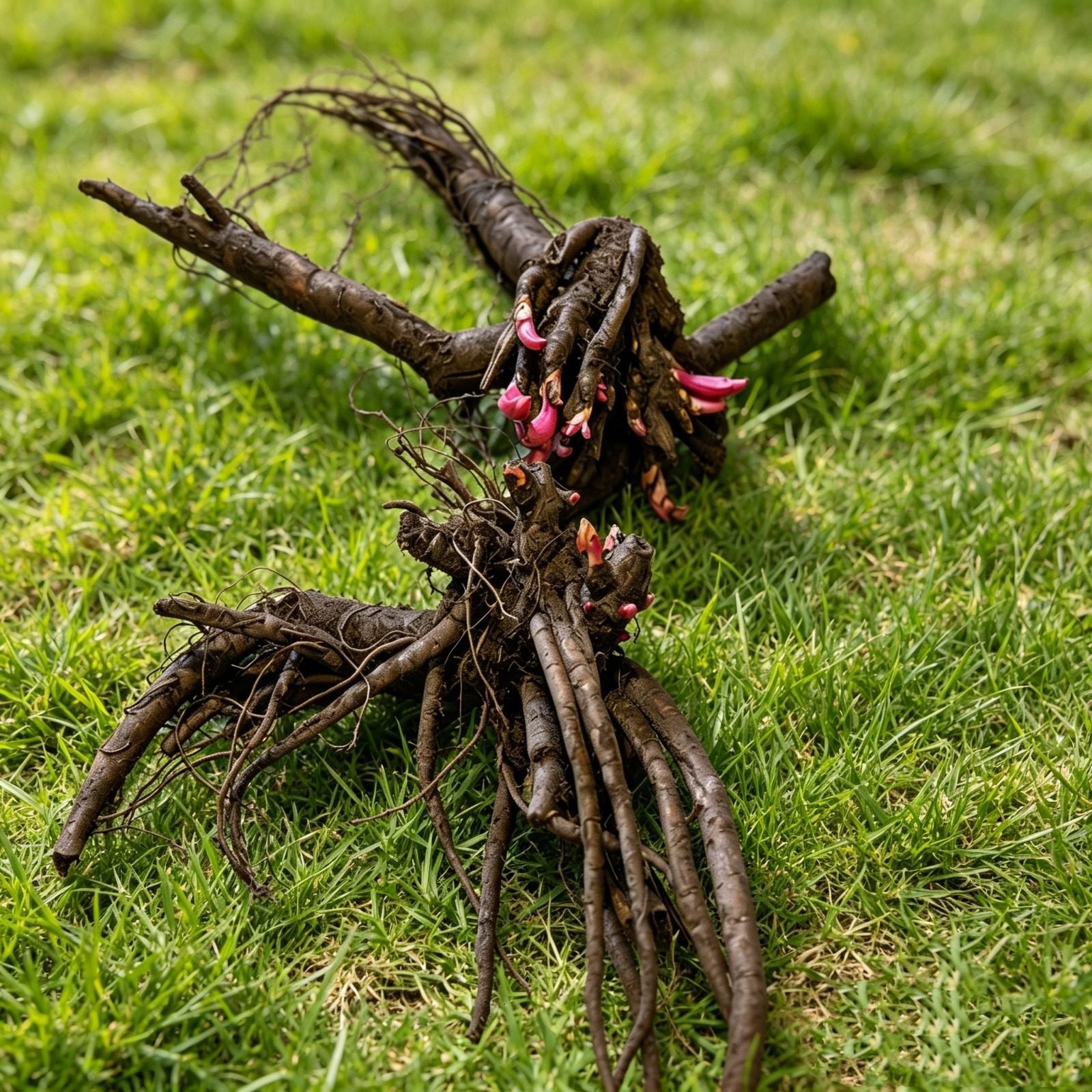
You can buy a peony two ways: as a dormant root in a bag, or as a leafy plant in a pot. The potted one looks like you are getting more for your money. You are usually getting less.
What a bare root actually is
A bare root peony is a dormant division lifted from the field in autumn, with the soil shaken off. It looks like a small woody crown with a fringe of carrot-like roots and two or three pinkish eyes on top. It is not much to look at, and it is the way peonies have been sold commercially for a century.
Because it is dormant, it can travel in a box for a week without suffering. Because there is no soil, it can cross borders and clear inspection. And because it weighs almost nothing, it can be shipped for the price of a letter rather than a parcel.
The case for bare roots
- Cost. Typically 40–60% less than the same variety in a pot. You are not paying to ship soil.
- Selection. Speciality growers list dozens of varieties as bare roots. Potted plants at a garden centre are usually three generic pinks.
- Establishment. A dormant root planted in autumn puts its energy into roots, not into recovering from transplant stress.
- Root visibility. You can see exactly what you are buying — eyes, firmness, size. A pot hides everything.
The case for potted peonies
- Instant garden. A potted plant has foliage on day one. Useful if you are planting for an event or filling a gap.
- Spring availability. Garden centres sell pots in April when nobody has bare roots left.
- Lower risk for beginners. Less to get wrong — no depth judgement on a bare crown, no rehydration.
The catch is timing. A peony potted up in spring is usually a field root that was lifted the previous autumn and forced into growth. It transplants badly, often sulks for a season, and costs more for the privilege.
How to judge a bare root before you pay
- Count the eyes. Two or three plump eyes is a saleable division. One eye is a gamble; five is generous.
- Squeeze it. Firm like a fresh carrot. Spongy or hollow means it has been stored wet or too warm.
- Look at the cut surface. Clean and pale. Black or slimy edges mean rot is already in the crown.
- Check for mould. A dusting of dry soil is fine. Grey fuzz is not.
- Weigh it in your hand. A division the size of your palm with a good root fringe is right. A huge crown with no roots is a showpiece, not a plant.
Which one should you buy
| Bare root | Potted | |
|---|---|---|
| Best planting window | Sept–Nov | Spring, or any time if kept watered |
| Cost | Lower | Higher |
| Variety choice | Wide | Narrow |
| First-year bloom | Usually none | Sometimes one |
| Long-term vigour | Better | Good, if planted at the right depth |
| Shipping | Cheap, forgiving | Heavy, fragile |
For most gardeners, most of the time, bare root wins. Buy in autumn, plant within a week of arrival, and set the eyes 1–2 inches below the surface. If you want the full method, our step-by-step planting guide covers it, and the depth guide explains why that measurement matters so much.
If your roots arrive and you cannot plant for a week
Open the bag, check for moisture, and store them somewhere cool and dark — a garage, a shed, the bottom of the fridge in a paper bag. Not wet newspaper in a warm room. If the roots look dry, mist them and close the bag loosely. A week like this is fine; a month is not.
Ready to plant? Our peony root collection ships dormant, hand-graded divisions with two to three visible eyes, in colours from soft peach coral to royal blue.
